Showing posts with label 1973. Show all posts

Wednesday, June 21, 2023

Pink Floyd - The Dark Side of the Moon (1973)

Dan:

There's hardly any room for additional commentary on Pink Floyd's classic The Dark Side of the Moon. So I'll just relate the story of my first encounter with it. As we moved from Pittsburgh to Miami in August 1977, we learned that Elvis Presley had died. Rock and roll had certainly moved on from the Elvis years, as the entries of our blog document. I had only begun to appreciate the significance of progressive rock and did not think of it as a genre. But that was soon to change.

One day, probably in early 1978, I was home listening to the noontime album on FM but got distracted. From another room I could hear the sustained low chords introducing "Time," which I had never heard before. I'm not sure if I rushed into the listening area or not, but I did hear the announcement at the end of the hour that the album just played was, in fact, The Dark Side of the Moon

I decided to get more rock albums into my jazz-heavy collection. So I went to South Miami and found copies of Dark Side in a pile next to piles of Billy Joel's The Stranger and Steely Dan's Aja. I figured the ones piled up were newly released and therefore the hippest choices. But the reason Dark Side was stacked up was not because it was a new release (like the other ones were). It had been selling in huge numbers since its release almost five years earlier! Duh.

This story illustrates just how clueless I was - probably the only 34-year-old person who had not yet heard such a famous album. Little did I know I would be blogging about it 35 years later. 

By now I've listened to and/or owned virtually every Pink Floyd album (thanks to my boy Steve). Only The Final Cut (1983) was a disappointment, but I probably gave up on it too soon. Even the novelty numbers from The Piper at the Gates of Dawn and Saucerful of Secrets have an enduring charm about them. I will always remember singing "Bike" with the whole family in our flat in Copenhagen in 1982. Steve was 12 years old at the time. No wonder he turned into a prog connoisseur!

The Dark Side of the Moon deserves all of the accolades it has received since its release. It's magnificent.

Steve:

I was in elementary school when Dan started playing the hell out of this album in our house. We had lots of fun going to Sound Advice (a hi-fi store in Coral Gables, Florida) to sample new stereo gear and speakers, and it was common for customers to bring along their own albums. The Dark Side of the Moon was a perfect subject for such tests, as was Aja by Steely Dan. The album seemed so cutting-edge in those late 70s that I recall being genuinely surprised to learn that it was released in 1973 - a lifetime ago in my personal timeline as a pre-teen.

This album's impact on Pink Floyd's career should be obvious by now - I almost consider pre- and post-DSotM Floyd as two separate bands - but it also had a seismic effect on popular music itself. Similar to Sgt. Pepper's Lonely Hearts Club Band, this was a rare time in popular music where the cutting edge of music coincided with mass popularity; Dark Side of the Moon remains one of the best-selling albums of all time. Albums like this still do occur, but it's a wonder when they do. Both the music itself and its societal impact should be taught in schools.

Tuesday, June 20, 2023

Genesis - Selling England by the Pound (1973)

Dan:

After moving to Miami in 1977, I kept hearing about a band named Genesis, like they were something special. As I read about them, one reviewer maligned their music as "ponderous Medieval suites." I took that as a positive and began investigating more deeply. 

I began with Trespass. Indeed, it was a Medieval suite replete with murderous wolves and threatening knives. I liked it. The following album, Foxtrot, was even stranger judging from the cover that pictured a red-dressed woman with a fox's head standing on a floe surrounded by sharks. Nursery Cryme also had disturbing cover art: a croquet-playing child poised to swing her mallet at decapitated heads. 

Despite their gruesome covers and themes, each LP contains great prog compositions, including gentler songs like "Time Table" from Foxtrot, "Harlequin" and "For Absent Friends" from Nursery Cryme, and "Visions of Angels" from Trespass. Each of these earlier albums tell compelling musical stories that helped to shape the emerging genre of progressive rock. 

Phil Collins had been with Genesis through all of the aforementioned albums (save Trespass), and frequently sang harmony vocals behind Peter Gabriel. He was given a rare lead vocal spot on Selling England by the Pound, on which he sang the brief "More Fool Me." Soon he would take over the band and adopt a more pop style, leading to outrage among dedicated fans but more album sales and popularity. I won't weigh in on that overworked controversy.

To my ears, Selling England by the Pound, is the best Genesis album. That's NOT because the earlier and subsequent albums were flawed in any way, but because Selling England is so good. It combines the narrative approach but anchors it in more contemporary English life. It includes the accustomed theme of conflict - "The Battle of Epping Forest" - which refers to a real park that is literally just outside many Londoners' doors. A modern version of Romeo and Juliet is the subject of "Cinema Show". The four lengthier tracks are superb in design and execution, beginning with the opener "Dancing with the Moonlight Knight," which nods to the Medieval themes of previous albums. 

"Firth of Fifth" is a masterpiece, highlighted by one of the most perfectly constructed guitar solos I've ever heard. It's not an improvised solo, of course, since Steve Hackett plays the same notes in live versions of the song. "Firth" also contains the best lyrics I've heard from Genesis, especially the closing line: "The sands of time were eroded by the river of constant change." 

Also noteworthy is "Cinema Show" which segues into "Aisle of Plenty" to close the album. I remember sitting with Steve after a long car trip. At home, I put on my Classic Records pressing of Selling England, side 2 as requested because Steve liked "Cinema Show" the best. I had to agree with the choice, even though I usually played side 1 to hear "Firth." Steve also clued me into the source of the deep bass notes that add to the drama of "Firth of Fifth;" he said they were pedals. I never knew what they were except I was sure they were not simply electric bass notes. Nice to have a living prog encyclopedia in the family!

Steve:

Like many people of my generation, my first exposure to Genesis was hearing their numerous late 70s and early 80s hits on the radio. Abacab, Three Sides Live, and Genesis were all extremely popular among my peer group, and I rarely heard any mention that there was a band before "Follow You, Follow Me". I was fully on board with this crowd (and for the record, I still enjoy the Collins years as much as I do the Gabriel years). Of course, I was aware of the Peter Gabriel era (Peter himself was making hits at the time as well) because I would see these oddly Medieval looking earlier albums in the record stores. At the time, seeing a track on an album such as "Supper's Ready" with its multiple sections and 23-minute length was decidedly not a selling point for me. I can still remember what it felt like to be neither impressed by nor interested in the supposed selling points of progressive rock, and that memory has helped me understand the mindset of average folks for whom majesty, complexity, and musical ambition really doesn't matter much. I still liked what I liked, and I was certainly exposed to a lot of progressive music thanks to Dan, but it wasn't something I was actively seeking at that age.

I got a fairly good introduction to the Gabriel-era stuff via Dan, which prepared me for the full-on obsession come my college years, where I had a similarly curious friend to discover prog with (Rob, mentioned elsewhere in this blog). Selling England by the Pound is widely considered to be one of the elite prog albums in the genre's entire history. Progarchives.com currently lists it as the #2 album of all time, based on an algorithm primarily driven by user ratings and reviews. I had not looked at the rankings for over a decade prior to writing that last sentence, yet I was confident that this album's stature would not have changed since that time.  

Even music fans not particularly into prog hold it in high regard. I believe this is because of the poetic yet approachable lyrics and the fact that the band had reached a peak in its ability to compose and arrange lengthy songs that told a story apart from (but in tandem with) the lyrics. Simply put, this album is surprisingly accessible and deals with very human emotions, fears, and concerns. The overriding theme, I believe, is that of wistful regret over a Britain that somehow lost its way - with vivid character studies of everyday people in a variety of settings, my favorite being the eccentric man obsessing over his lawn while wondering where it all went wrong in "I Know What I Like (in Your Wardrobe)".  

I still have a hard time following "The Battle of Epping Forest", the one song that is forever singled out as a weak spot on the record. Its only flaw, however, is that it makes you work a little harder to enjoy it - in contrast with the rest of the record, which goes down as easily as a nice cup of tea.

Monday, June 19, 2023

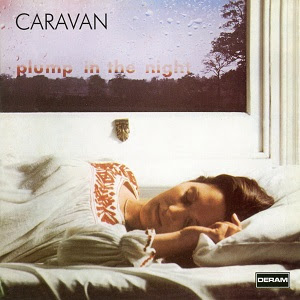
Caravan - For Girls Who Grow Plump in the Night (1973)


Steve:

As mentioned in my commentary on In the Land of Grey and Pink, Caravan were among the first progressive rock bands I adopted once I had graduated from the "big guys" of Yes, Crimson, Genesis, Floyd, etc. and explored the lesser-known stuff. Caravan's If I Could Do it All Over Again, I'd Do it All Over You; In the Land of Grey and Pink; Waterloo Lily; and For Girls Who Grow Plump in the Night were all frequent spins by both me and my chum Rob in that year at college. I have a pleasant memory of Rob and I listening to a Charlotte NC classic rock station at night, and noticing the DJ's selections were leaning pretty hard in the prog direction. We called the station and talked to him and made a request for some Caravan. "Caravan! I love them! What song?" We replied, "how about 'Memory Lain Hugh/Headloss'?" (from For Girls Who Grow Plump... hang on... all these long titles are making me tired). And he did - except he chose a different song from the same album, "The Dog, the Dog, He's at it Again", which was perfectly welcome as well because this album is solid all the way through.

On Caravan's 5th album, the band seemed to finally settle into a pair of shoes that they would wear comfortably for the remainder of their existence. Bassist and co-lead singer Richard Sinclair had left to join Hatfield and the North, leaving Pye Hastings as the primary composer and sole lead singer. A key new addition to the band was Geoff Richardson, providing ecstatic violin work that adds a good-time hoedown atmosphere to the progressive rock seriousness. There actually is a song called "Hoedown", though you'll never mistake it for New Riders of the Purple Sage with its 7/8 meter.  

Most importantly, the production values improved noticeably over their prior albums. There is a depth to the arrangements and the mix that gives the impression that this is a big budget mainstream album. Caravan were able to take advantage of this new sonic broth with consistently enjoyable songs that even your friends can smile and bob their heads to, while maintaining the element of surprise with unusual compositional decisions and exciting twists and turns. All this makes For Girls Who Grow Plump in the Night the Caravan album that has aged the best for me. 

Dan:

Thanks again to Steve for turning me on to Caravan. For Girls opens with an exuberant suite of happy songs comprised as "Memory Lain, Hugh Headloss" and continues for the rest of Side 1, disturbed only slightly by the shifts to minor themes in "C'Thlu Thlu." Side 2 is basically two longer suites, similar to the wonderful "Nine Feet Underground" on Grey and Pink. "Chance of a Lifetime" appeals to me most, given its optimistic whimsy. It's also marked by a lovely viola solo by Richardson, who proves that he's not just a hoedown fiddler. "L'augerge de Sanglier" kicks off the final five-part suite that includes what I take to be the lovely "Pengola" before bringing the album to an exciting conclusion. 

Sunday, June 18, 2023

Can - Future Days (1973)

Steve:

Prior to 1990, Can were a band I'd only heard about, lumped in with the German bands all callously tossed under the "Krautrock" umbrella, so when they finally made their debut on CD, I made sure to give them a try. Ege Bamyasi was my first, and it was not quite what I was expecting -- very repetitive and groove-oriented, it seemed on the surface to be the antithesis of the complex meters and multi-part suites that were part and parcel of prog. However, it did sound pretty awesome, so I continued to buy up their back catalog as it became available, even if I never considered them as a particular favorite. Even Future Days, the subject of this gushing review, only received an occasional listen at the time. 

It was a few years later that the details and the soul within this album hit me like a ton of bricks. That epiphany has stuck. If I had to name my favorite album of all time, this would probably be it.

These days, Can is an extremely hip band to name-drop. Their immeasurable influence on bands as diverse as Public Image Limited, Primal Scream, The Flaming Lips, and Radiohead (all extremely hip bands themselves) has put Can in an elite class of "influence" bands. And that is understandable. They were doing a sort of pre-trip-hop groove music all the way back in the early 70s, with studio sound quality that rivals that of their modern-day acolytes, despite having recorded most of it in their own studio on reel-to-reel tape with a minimum of overdubs. Still, Can can be an acquired taste for even the hippest of listeners. You can't blaze that many trails without leaving a bit of a mess in your wake, and Can could be difficult listening at times.

The key to their success (artistically anyway) was their tremendous skill at recording, engineering and editing the hundreds of hours of jams that were the band's daily work. Much of the credit for this goes to bassist Holger Czukay, a former student of Karlheinz Stockhausen, who took the curating and editing process as seriously as the music itself. Keyboardist/noisemaker Irmin Schmidt was also a Stockhausen student and had similarly sophisticated strategies in mind when crafting his parts and deciding what worked and what didn't. His role was laying beds of weird textures and chords to buttress the rhythmic storm of the ensemble.  Speaking of which...

No discussion of Can's incredible music is complete without heaps of praise laid on drummer Jaki Liebezeit who makes it all sound so easy. Indeed, you can listen to an entire album and realize you never stopped focusing on the drums (I do this with Led Zeppelin sometimes too). Guitarist Michael Karoli, much younger than the other guys in the band, was arguably the most conventional musician of the bunch, and helped ground their albums in a standard psych/rock language that improved its accessibility. That would still not be enough without the Czukay/Liebezeit groove machine sending your mind and body into a trance.

For me, Future Days is where the band's evolution over the previous 4 years reached a zenith and produced a sound that remains one of the most intoxicating I have ever heard. It is much mellower than any of their previous albums, but that mellowness is deceptive, as there is a continuous slow boil of tension just beneath the surface throughout the album. Liebezeit's work especially is incredible - extremely polyrhythmic, in the pocket, and yet quiet.

Each of the four tracks - one short one, two long ones, and one really long one - maintains the calm yet tense mood (upping the tension to a fever pitch at times, when needed) but approaches it from a different angle. Whether in a fun and playful hop ("Moonshake"), a foggy float through the clouds ("Future Days"), an exciting foot race through a dark forest ("Spray"), or all three at once ("Bel Air"), the focus and control of the band is felt throughout. Future Days is a remarkable achievement, which I highly recommend particularly to fans of adventurous modern indie rock. This was Radiohead's "Kid A's daddy", as one forum participant described it after I recommended Future Days to him.

Dan:

Years ago, Steve fed me a bunch of Can CDs, which I listened to dutifully but probably only played once or twice. I did not rip any of them into my digital collection. Within the past two years, however, I noticed that Future Days had been remastered and reissued as a Hi Rez download, so I asked Steve if he still had a copy I might revisit. Excitedly, he said Future Days was his all-time favorite album and brought me the CD and a new heavy vinyl pressing. The vinyl's sonics were especially impressive. We eventually "needle dropped" Side 2 of the vinyl into a lossless digital file which I combined with the rest of the Hi Rez tracks that I downloaded.

I'm glad I did so because I really like the whole album and agree with Steve's gushing assessment. Each time I play Future Days, I marvel at the discipline of the bass and drum lines, which never seem to relent. I'll also add mention of a key member of the band - vocalist Damo Suzuki, shown in the partial band photo with Holger Czukay. His vocals add a patina of mystery over the music on Future Days, whether he's chanting a lyric or just vocalizing wordlessly. 

Lastly, I recalled the name Holger Czukay from his two duets with David Sylvian: Plight & Premonition (1988) and Flux + Mutability (1989). Czukay's penchant for ambient creations elevated those albums from the snooze of traditional ambient, and it's now obvious to me why Future Days has such distinctive rhythmic juice.

Saturday, June 17, 2023

Santana - Welcome (1972)


Dan:

As each new year arrived in the 1970s, I was eager to hear what the next Santana album might bring. The successor to Caravanserai was Welcome, and I welcomed it into my collection as soon as I could. I knew the title tune was by John Coltrane, and I also noticed that Coltrane's widow, Alice, was involved with Welcome as the arranger for "Going Home," the album's first track. Also contributing to Welcome was British guitarist John McLaughlin; Carlos and John would collaborate in 1973 on Love, Devotion and Surrender. Alice and Carlos were to collaborate on 1974's Illuminations

This set of albums and their instrumental lineups intrigued me. The jazz influence was obvious, but so were the Santana guitar solos (and guitar duets with McLaughlin), and a distinctive spiritual signature. Alice was well into her monastic era, which lasted until her death in 2007 (and probably beyond). All three artists also adopted spiritual names: Turiya Alice Coltrane, Devadip Carlos Santana. and Mahavishnu John McLaughlin (not to mention drummer Maitreya Michael Shrieve). Devadip and Mahavishnu also wore white clothing and openly acknowledged the influence of Guru Sri Chinmoy. (The photo shows Santana wearing a Sri Chinmoy t-shirt).

The programming of the tracks on Welcome creates an effective link between the low temperature tracks ("Going Home," "Mother Africa," "Light of Life," and "Welcome") and the more incendiary tracks (especially "Flame-Sky"). Instrumental and vocal tracks also work together, as they did on Caravanserai. Vocals are performed by Leon Tomas and guest Flora Purim. Almost everyone gets in on the writing of the seven original pieces, which beautifully complement the John Coltrane and 
Antonín Dvořák compositions.

Music like this got me through the mid-to-late 1970s. It filled the void left by jazz, which had turned to lighter fusion material to compete commercially with rock. I much prefer jazz-influenced rock than rock-influenced jazz. Yes, there is a difference, although in particular instances it's better to drop the labels and enjoy what you hear (as in the case of McLaughlin's Mahavishnu Orchestra). 

Steve: 

Although I do not listen to Welcome nearly as often as Caravanserai, I still consistently enjoy it all the way through each time I do. The Coltranes' (both John and Alice) influence is very pronounced on this album, as is the McLaughlin and Sri Chinmoy influence, guaranteeing this to be a much more spiritually minded Santana effort. I recall several of these tracks from my youth, no doubt from Dan's turntable, including "Mother Africa" with its curious organ melody, Jose Arias' "Samba de Sausalito", and the Flora Purim-sung "Yours is the Light".  

In recent years, I discovered the source of the opening Alice Coltrane meditation "Going Home", via Alice Coltrane's Lord of Lords album, which I purchased along with a couple other of her albums. Much of my recent interest in Alice Coltrane stems from a collaborative album Carlos Santana did with her around this time called Illuminations (mentioned by Dan above), also worth your time. 


Wednesday, June 14, 2023

Santana - Caravanserai (1973)

Dan:

Following the success of their first three albums (Santana, Abraxas, and Santana - yes, the first and third albums had the same title), the band turned in a new direction. Instead of focusing on creating hit songs, they developed more thematic albums in which songs and longer suites would be programmed together. Caravanserai and its successors (Welcome and Borboletta) retained little of the Latin-rock that fans had come to expect and substituted longer instrumental tracks that appeared to draw upon jazz influences. 

On Caravanserai, the new direction manifested itself by running songs together into suites, although they are not designated as such. Everything flows together starting with "Eternal Caravan of Reincarnation," featuring jazz saxophonist Hadley Caliman. Even the vocal numbers are sequenced as parts of the whole: "Look Up" flows into the wonderful instrumental "Song of the Wind," which flows into the second vocal, "All the Love of the Universe." Neither of the songs became hits but they were not intended to be. 

Side 2 follows a similar development with "Stone Flower" as the only vocal. It's followed by the extraordinary sequence of "La Fuente del Ritmo" and "Every Step of the Way," which consume 13:32 minutes to close the album. These show Santana (both the band and the leader) doing what I like best. The driving rhythm is the key impetus for great solos on electric keyboards, organ and, of course, Carlos' sustained wails on guitar. Hearing the Latin percussion pushing the band in this way is an exhilarating experience. 

I might have had the pleasure of hearing Caravanserai live when Santana played at the university I was attending. Frank Zappa was the opening act. I did not go because I had a young child at home. I've chided Steve many times for being the reason why I couldn't go. As punishment, he was forced to listen to prog music every day. He and his mom later let me go to another campus concert by Emerson, Lake and Palmer. 

Steve:

I didn't know that Santana was also playing at that same concert with Zappa that Dan had to miss on my behalf. Ouch. If it's any consolation, I didn't turn to crime and drugs thanks to his attentive care, so overall I think it was worth the sacrifice.

Caravanserai is one of a handful of albums I remember quite clearly from my early life. At my young age, I tended to study the album covers almost as intently as the music, and the cover art for Caravanserai is the perfect image to accompany the opening "Eternal Caravan of Reincarnation" - that track and that image are both indelible parts of my impression of this album, then and now.

Partly because of my early exposure to this album, it has remained my favorite Santana release. I didn't even bother to listen to the more popular first three albums for many years; most days, Caravanserai is the only Santana I need. 


Wrap Up - Our Final Post

We've reached the end of our project, having posted joint reviews of 130 albums and including comments on many others as part of our com...